
Risk Big

Cat Goodrich

Faith Presbyterian Church, Baltimore, MD

November 15, 2020

Risk Big

Matthew 25:14-30


About a week and a half ago, three climbers got their gear ready.  They filled chalk bags, and stocked backpacks with water and granola bars and fruit.  They checked their ropes, and packed up their harnesses, carabiners, and climbing shoes.  Feeling ready, they set out in the dark, heading across the floor of Yosemite Valley.  It was cold, November in the high Sierra, but they had good light from the waning gibbous moon.  A deer stopped to watch them as they made their way to the base of the mountain, gravel crunching beneath their feet.  Two of them, a man – Alex Hannold of Free Solo fame, and a woman, Emily Harrington, got into their harnesses, squeezed into their tiny climbing shoes, and started to climb.  It was 1:30 in the morning.  Less than 24 hours later, she pulled herself over the top of the wall – and became the first woman to free climb the Golden Gate route of El Capitan in a day.  An amazing feat: a feat of strength, climbing ability, courage, and tenacity.  It is risky to attempt to climb that giant granite cliff face at all – some 25 people have died trying – much less to climb one of the most difficult routes in just a day.  Harrington herself had tried before and failed.  But not this time.  This time, despite a fall halfway up that left her head bloodied and her confidence shaken, her big risk paid off.


When is the last time you took a risk?  Stretched yourself?  Attempted something even though you weren’t sure what the outcome would be?  Said yes to a challenge?  Tried something new?


The idea of risk has taken on new meaning for me this year.  You might have already guessed this that about me, but I’m a fairly risk-averse person.  I love new experiences, but I want to be safe while trying them.  One of the most stressful parts of the pandemic is that Covid makes normal everyday life activities potentially risky – shaking hands. Eating in a restaurant.  Working out at the gym. Singing in church.  Having friends over for dinner.  Traveling to celebrate Thanksgiving with extended family.  All of these normal events have suddenly become risky. They could mean illness for some, or even death for others.


Some believe the parable of the talents is a story about risk.  They hear it asking, what will you do with the gifts you’ve been given?  What are you willing to risk for the sake of the kingdom?


This is one of the last stories Jesus tells in the gospel of Matthew, right before the last supper and all that comes after.  He is preparing his disciples for life after his death.  It’s important to know that there were a lot of faithful people at this time who believed the end of the world was imminent.  Matthew’s community thought Christ would return in their lifetimes.  So how are they to act in the meantime?  Are they going to be like the first two servants, taking risks to grow what has been entrusted to them?  Or will they play it safe, keep their heads down, and bury their gifts like the third guy?


This is, in some ways, a problematic story.  It’s hard not to read parables as allegories, to see a direct correlation between the characters and real life.  But that gives us the image of God as the generous but harsh slave owner.  What do we do with that?


We’re Presbyterians, so we know that God gave us brains and expects us to use them.  The Bible is a book bound by space and time.  Slavery was a part of the Biblical world, and so there are references to enslaved people and those who owned them throughout the old and new testaments.  Wrestling with this imagery, Stillman College religion professor Dr. Joe Scrivner, said – look, Jesus was teaching in the first century.  He told stories that made sense in that context.  Slavery was rampant at that time, part of everyday life.  The Israelites themselves had been enslaved.  He used the imagery available to him to teach.  He wanted to raise questions, provoke conversation – with this story, it seems like he wanted to show his followers how they were to carry on after his death.  It’s possible he also wanted us to think about what we believe God is like.  Is God a cruel and merciless master?  Or is God generous and kind, merciful and just, slow to anger and abounding in steadfast love?  Parables aren’t allegories, they’re conversation starters!


In this parable, the landowner gives his servants an absurd amount of money – a talent was about 15 years of wages.  If average income today is around $40,000, then that means the first two slaves are entrusted with almost $3 million dollars.  They take risks, play the market, invest and double their money – well done.  The third slave, however, fearing failure and the harsh capriciousness of his master, buries his.  Nothing ventured, nothing lost.


When I read and hear talent, I don’t think of money – instead, I hear talent!  Giftedness, innate ability.  It makes me wonder, how do we use our giftedness for the benefit of God’s kindom?  Do we offer what we have, risking everything, in the hope that the Spirit compounds our gifts?  Or do we play it safe, dream small, mitigate risk, to preserve what we have and avoid the possibility of failure?


Do we act in faith, or do we act out of fear?


Renowned social work professor Brene Brown does research around shame and vulnerability.  One of her first books is called Daring Greatly – and in it, she talks about how much people hate vulnerability – we do everything to protect ourselves, to avoid it.  But it’s necessary – she calls vunerability the midwife for creativity, for growth, for love.  Life involves risk, it just does.  Big risks, like writing a novel, or starting a business, or changing jobs, or falling in love – are scary!  Of course they are.  The possibility for failure is real.  But taking risks can lead us to incredible joy!  The growth that comes through risk and change and trying new things, makes us come alive.  It ignites our imagination, heightens our senses, leads us to places we might never have thought possible.


In my organizing work in Alabama, a friend named Chris Stewart, a Black Baptist preacher, challenged me and my white colleagues, asking – what are you willing to risk for this work?  What are you willing to risk to confront and dismantle racist systems in this state?  Are you willing to put your body in places that are uncomfortable?  Are you willing to put yourself on the life to create change?  Chris would say, I don’t have a choice about it, I’m always at risk.  You do.  So what are you going to risk?


I think about the activists walking onto highways to block traffic, braving tear gas, putting their bodies in harms way to call for police accountability, to proclaim that black lives matter – their risk is creating change.


I’ve long been an admirer of the Berrigan brothers, Catholic priests who struggled against nuclear proliferation and war by demonstrating at nuclear sites, and throwing their blood on the steps of the Pentagon.  A friend of this congregation, John Hutchins, introduced me to a new saint and co-conspirator of the Berrigans – Sister Ardeth Platte, who died not too long ago.  Ardith was a Dominican nun who lived in a Catholic Social Worker house in DC.  She spent more than 15 years in prison for her own peace activism.  Instead of lamenting the time she spent behind bars, she continued her work for love and justice there, seeing it as an opportunity to minister to the poor, teaching and serving the other women she served time with.  In her obituary, a friend says Ardeth was “a renegade and lawbreaker who was truly inspiring.”  [She and her best friend] “truly lived the gospel, with a wonderful sense of humor and exuberance and joy.”[1]


This problematic parable is easy to domesticate – easy to think that it’s about not burying your talents, using your gifts in small ways for the benefit of the community.  It is right and good to do this, of course.  But what is your El Capitan?  What is the wall that beckons you over, the challenge you are willing to put your life on the line to confront, to struggle to overcome?  What are you willing to risk everything to accomplish?


In an interview after her incredible climb, Harrington was asked – how did she overcome her fear to do this?  She said, “I didn’t…”. She deals with fear all the time when she climbs, she said, she carried it all the way up.[2]  But she has learned to move through it – because embracing fear and pushing through is how you grow.  Courage is feeling afraid and doing whatever it is anyway.


We are at the beginning of a new chapter in the life of Faith Church.  I don’t need to tell you that the challenges of this time are many.  But God, who is loving and just, merciful and kind, slow to anger and abounding in steadfast love – God has given us what we need to thrive: hands to serve.  Hearts to love.  Lives to offer in pursuit of justice, to build the kindom.  Don’t be afraid!  There are incredible joys in store.  Let’s risk big together.


[1] Schossler, Eric, qtd. by Penelope Green, “Ardeth Platte, Dominican Nun and Antinuclear Activist Dies at 84,” The New York Times, October 8, 2020. https://www.nytimes.com/2020/10/08/us/ardeth-platte-dead.html.

[2] Harrington, Emily, interviewed on the Today Show, https://www.today.com/video/meet-emily-harrington-1st-woman-to-free-climb-el-capitan-famed-route-in-1-day-95638597929.

Free to Choose

Cat Goodrich

Faith Presbyterian Church, Baltimore

November 8, 2020

Free to Choose

Joshua 24:1-3, 14-25


Life in the US in the year 2020 involves a lot of choice.  We might have more options available to us than any other humans in history.  Think about it: With the internet in my pocket, the world’s libraries are literally at my fingertips.  Add a charge card, I could choose to buy a million different books, thousands of different pairs of shoes, a dizzying array of kitchen gadgets and articles of clothing.  I could order practically any meal I could imagine from hundreds of different restaurants and have it waiting at home when I get there after worship.  And choice isn’t only online.  Anyone who has travelled in the 2/3s world can tell you how disorienting it can be to go to a grocery store here in the states: an entire aisle of breakfast cereals, fifty-two flavors of ice cream, not just eggs but eggs that are extra large, cage free, free range, grain fed, natural, pasture raised, local, and organic.  Our choices as consumers in this country are limited only by our resources.


Life in any democracy – government by the people, for the people, and of the people – is governed by choice… at least in theory.  And we exercised our right to choose this week, voting for people to govern our city, and lead our nation.  A vote is a choice: a moral choice, where we put our power towards policies and people we believe will promote our values.  Richard Rohr writes, “voting is a deeply moral act for me… a decisive act of Christian faith that I matter, society matters, justice matters, and others matter.”[1]  It’s a relief to me that the kind of election that happened and was counted… and counted… and counted this week only comes around every four years.  But election or not, each day brings moral choices for us, albeit on a smaller scale.  A chance to respond with love to the people around us.  To listen to one another.  To use our voice to advocate for change.  To be honest and hardworking and compassionate and faithful.  What do we value?  Who do we serve?  Will we make choices that reflect those values, choices that testify to our faith?  Do our choices show a deep-seated belief that justice matters, that we matter, and that others matter?


At first glance, the speech Joshua gives to the Israelites seems light years away from the choices that govern our strange, 2020 lives.  He’s leading his people to renew an ancient covenant as they begin life together as a new nation in a newly conquered land.  To do this, he reminds them where they came from, and recounts all the ways God accompanied them and their ancestors along the way. God worked through Moses to liberate them from slavery, to feed, sustain, and guide them through the wilderness.  Joshua reminds them that their ancestors once worshipped other gods, but God has called them to be faithful only to YHWH, the one true God. And Joshua calls the people to account, saying – choose this day who you will serve… and then he makes a public proclamation: as for me and my house, we will serve the Lord.


Joshua is preaching from memory to hope.  He evokes the memory of what God has done for them, and calls them to renewed faith… reminding them of their thirst in the desert, slaked by fresh water pouring from a rock. Reminding them of how their bellies growled in hunger before God made manna appear to sustain them.  Reminding them that though once they were no people, now they are God’s people.  He gives them hope for the future.  Now, I know, Joshua’s speech feels far off.  But the question – the challenge – choose this day whom you will serve… this is a live question for us, for me.


As people of privilege in the US, there is so much we are free to choose.  And there are a lot of gods that compete for our attention, our loyalty.  In this pandemic time, it’s obvious that our personal choices – your choice and mine – are intertwined. For many, the need to work takes away the choice to stay home or stay distant to protect themselves. They don’t have a choice.  Which makes our choice to abide by public health recommendations even more important, for everyone’s health and well being.  The last eight months have taught us that our personal choices have wide social, economic, and political consequences.


Our choices as individuals, as consumers, and as citizens also reveal deeper truths about what we value.  About whom we serve and worship.  Each day is an opportunity to recommit ourselves to the God who has called us, saved us, sustains us, loves us.  By choosing to love, serve, and honor one another.


I struggled to know what to say to you this morning.  Words fall short under the weight of my relief.  The fragile ember of hope that I’ve sheltered for so long has caught fire again, and yet still I am cautious.  I’m wary of what the coming days might bring.  I’m also aware that there are those among us who are not feeling relieved one bit.  How do we find a way forward, loving, honoring, and serving God together, with hope for the future, in this fraught, fractured time?


Joshua was seeking to unify his people, calling on them to rededicate their lives to love and serve God.  It seems like what we might need to do right now, too.  With the huge divides that separate us, it seems impossible.  There’s probably more than one family feeling a sense of relief that Covid gives them an excuse NOT to have to gather around the Thanksgiving table with extended family of a different political persuasion, relieved that they don’t have to navigate that political mine field.  With family.  How on earth do we build unity and work for reconciliation?


By remembering the past, recommitting to serve God in the present, and looking with hope towards the future.


Many of you are older than I am, so you probably remember better than I do the wall that divided East and West Berlin.  It was built in 1961, to separate communist East Berlin from outside western influence.  When it went up, it cut people off from one another, separating families, friends, and people from their places of work – not unlike the wall across our southern border. In the almost forty years that it stood, hundreds of people were killed trying to cross over.  One street that ran beside a section of wall was called the street of sorrows, so many desperate people had died there.  A towering symbol of the Cold War, it was difficult to imagine how or when it would ever be torn down.


And yet, in 1989, it was.  Gradual thawing in surrounding countries led to the opening of the gates, and people on both sides poured through and took sledgehammers to the separation wall.  I was only 8 years old when it happened, but I remember the sense of astonishment, relief, jubilation on the nightly news, the images of people dancing in the streets.  My sister did a report on the wall’s history, and somehow came across a piece of it, a grey and jagged chunk of concrete you could hold in your hand, a symbol of the triumph of western democracy and diplomacy, of the people’s freedom to choose.


Last year, on the thirtieth anniversary of the fall, a public art installation was put up through the center of Berlin, on the street in front of the Brandenburg Gate where the wall once stood.  120,000 fabric ribbons were suspended in the air, making a path of glorious color, floating in the air, rippling in the breeze.  Written on the ribbons were greetings, wishes, memories, and messages of hope from Germans and people around the world, some sent from afar, some written on the spot to mark the occasion.  The sculpture was meant to symbolize the unity of the German people and their mutual hope for the future.  The visual impact of the installation was breathtaking – ephemeral, beautiful, an undulating wave of color overhead – a testimony to the common hopes and dreams of the people in the place where razor wire, watchtowers, and unthinkable division had once ruled.


Change and reconciliation are possible!  Worship each week is a chance to reclaim this truth, and to recommit ourselves to the possibility.  To remember who and whose we are.  To tell the stories of our faith to each other, to our children and our children’s children, so we remember who God is and what God has done for us.  To ignite our hope for the future.  We are called into this space by the one who reached out to the margins and brought outsiders in.  Who healed the sick and helped the suffering, who spoke truth to power and tore down walls of division.  Let us choose this day to serve him, because the world needs us.  And we have a lot of work to do.

[1] Rohr, Richard, “Why I Vote,” Sojourners Magazine, 11/2018. https://sojo.net/magazine/november-2018/why-i-vote

Blessed?

Cat Goodrich

Faith Presbyterian Church

Baltimore, MD

November 1, 2020

Blessed?

Matthew 5:1-12


My favorite community event in Birmingham was initially a surprise to us.  Our first year there, we stumbled upon what seemed at the time to be a magical day of the dead celebration, tucked away in a bricked courtyard under the stars. I remember walking through a winding display of candlelit altars, each one paying tribute to a friend or loved ones who had died, their photos surrounded by flowers and their favorite foods, tables piled high with fruits and sugar skulls and twinkle lights, incense wafting through the air.  Mariachis wandered through the crowds of people who came to be part of the celebration, their trumpets blasting out familiar tunes as we gathered around fires to warm our hands as night fell.  As the celebration grew, year by year, it changed venues to accommodate the growing crowds, but the culmination of the evening is always the roll call of the dead – a single voice naming those who have died, one by one, and the crowd responding by crying out “presente” – collectively claiming the person’s memory, proclaiming together, they are not forgotten.


I do not know what this celebration will look like this year.  I imagine those who build altars will do so anyway, in their own homes as is tradition.  Many will visit the graves of those who have died.  But the festivities will not happen at least not in the same way.  The crowds will likely not gather, incense will not hang in the air like the fog of grief, the collective cry of presente will not ring out.


It’s too bad, because this is a year when we need that kind of celebration, we need to give voice to our grief, to name and claim the memory of all that we’ve lost, to bear witness together to the promise of life despite death.


This morning’s passage from the sermon on the mount in the gospel of Matthew is called, as you may know, the beatitudes.   Beatitudes because in the Latin translation, the word beatus means blessed, happy, or fortunate– happy are the meek, for they will inherit the earth.  Happy are those who mourn, for they will be comforted.  Another way to understand the original Greek word is: a reversal of fortunes.  To read these blessings as a promise of the future that God is making possible.


When Jesus describes who is blessed, it’s not who we’d expect. In fact, Jesus’s description of who is blessed and why is the opposite of how we typically think and talk about blessings.  Our culture tends to see successful people: strong, healthy, wealthy people as blessed.  We feel blessed when things are good, when life is going our way.  Right?


But Jesus turns our understanding of blessing upside down.

He’s preaching to a crowd of people, and a lot of them were sick.  Scripture tells us the crowds that followed him were people “afflicted with various diseases and pains, demoniacs, epileptics, and paralytics.”

These are not the people the world would call blessed, certainly not happy or fortunate.

These people are poor.  They’re hurting.  They are crying out for justice.  They need a reversal of fortune.

These are the people the world might call meek, people who really were persecuted.

And these people: the poor, the grieving, those longing for justice, the merciful, the pure, the peacemakers, the persecuted – these are the people God blesses!


Jesus looks out at the crowd gathered around him, a crowd of the poor and destitute, the sick and suffering, and says, you who are poor in spirit – so down and out that you’ve lost the will to keep going – God sees you.  You are blessed.


You who are meek, and merciful – the world does not reward these things.  But God sees you.  And you can be happy with the knowledge that you will be rewarded with the goodness of creation; you will receive the mercy you deserve in the kingdom of God.


You who mourn are blessed, because you will be comforted, for God is making all things new, building a city where no one will hunger or thirst, and every tear will be wiped away.


Today is All Saints Sunday, when we remember and give thanks for those who we love who have died.  And on this day, in this year, some of us might not feel very blessed.  This has been a year of tremendous loss for our nation and the world.  More than 4,000 in Maryland, more than 230,000 in the US, more than a million worldwide dead from the virus.  It’s incomprehensible.  That loss of life is compounded by a thousand other losses – that add up in many ways to the loss of our way of life.  We’ve lost the happy chaos of classrooms, the easy banter of the office kitchen, the soaring joy of congregational song.  Restaurants, concerts, sports events, air travel, public transit – none of them are the same.  Layer on top of that the other losses brought just by life … lost jobs.  Separation from community and family.  Lost pregnancies.  Lost health.  Lost love.  The non-Covid deaths of loved ones.  Lost hope.


This year, I think we are all finding our way through the fog of grief.  God’s promise of comfort is a far cry from actually feeling comforted. But we are people called into community.  The good news is that God gives us each other so that we are not alone in our grief, to bring casseroles and to tell stories so that even shrouded in sadness we find love and sometimes even laughter.  God gives us each other to remind each other of the promises of the resurrection: grief and death do not have the last word.  Together, we can give voice to our grief, name and claim the memory of all that we’ve lost, and bear witness together to the promise of life despite death.  That is a blessing.  There is comfort in that.


Over the past week, a tree has grown in the chapel, bearing names of people who have died who we, collectively, proclaim are not forgotten.  People for whom we give thanks.  Those whose lives have blessed us, and for whom our grief is in fact an act of resistance against the death-dealing power of this world, a testament to the truth that blessed are we who grieve for we will be comforted.


By proclaiming all of these unexpected blessings, Jesus is urging all of us who mourn the world’s suffering to look towards the world that is to come.  To see the Spirit present in our struggle, bringing about the reign of God on earth.  Christ is promising the comfort that comes when our rage and grief at the way things are moves us to act to change things for the better.  Think of the moment of relief that comes when you’ve overcome your anxiety and picked up the phone to encourage someone else to remember to vote, or the blessing that comes when we are able to offer help to someone who needs it – things we’re able to do because God is at work within us, transforming the world around us into something better.


The promise of the beatitudes that we remember and claim today is that the pain and suffering of this world does not escape God’s notice.  And God’s peaceable kingdom is closer than we realize.  Those who are marginalized and dismissed by the powers of this world will be uplifted and valued in the kingdom of God.


And so we name names.  We light candles.  We say, “presente.”  We raise our voices in prayer, giving thanks for those whom we love who have died, and we promise to remember them, giving voice to the truth that love is stronger than death.  Thanks be to God.


All You Need Is Love

Cat Goodrich

Faith Presbyterian Church, Baltimore, MD

October 25, 2020

All You Need Is Love

Matthew 22: 34-46


If you look up as you walk along Bleeker Street in Manhattan, you might notice, among the tangle of cables and telephone wires and power lines, a thin filament of fishing line high above you, running parallel to the street.[1]  If you kept walking, from Houston Street all the way up to 126th, you would see that line wind its way from telephone pole to telephone pole, building to fence post and back, encircling a portion of the city completely.  The fishing line, so thin you can only see it when the light catches it just so, is an eruv, and it’s there to help orthodox Jewish people keep the Sabbath.  There are eruv in Baltimore, too, three of them – the oldest is in Northwest Baltimore, surrounding Mt. Washington and running up to 695 and back.  As you know, a Sabbath is a day of rest, when God’s busy people are meant to rest – rest from work, dial back the frenetic pace that keeps us driving and cooking and hauling things from one place to another during the week.  For some strictly observant Jewish people, sabbath also means rest from using electricity, and even rest from carrying things – small necessary things like house keys, and medicine, and children.


How does anyone accomplish this?


The prohibition from carrying things does not apply at home. So the line, the eruv, is a symbolic enclosure that extends the area where observant Jews can carry things on the Sabbath.  It makes public space common private space in the eyes of the law, pushing the walls of the home out into the world.  Practically, this means young families can get out for walks and to synagogue on Saturdays instead of staying cooped up in their houses or apartments.  Now this line, the eruv, sounds like a recent innovation, an adaptation of the ancient law to fit our modern lifestyles, but actually it’s been in use for more than 1500 years.  The arrangement for the eruv in Manhattan dates back to the 1870’s, when the city agreed to lease access to the land for just $1 annually.  So for a long time, people have sought and at times struggled to interpret religious law in ways that are both faithful and lifegiving.


The legal code of ancient Israel is famously extensive.  There are 613 commandments written in the Torah (the first five books of the Bible), laws to cover everything from preventing criminal activity to regulating food and personal conduct.  The legal code is further extended by a huge body of rabbinic interpretation and oral tradition.  Together, the rabbinic tradition along with the written commandments is known as the Halakha – a word derived from the verb that means to walk.  That means the collection of the law together with its interpretation, is called, essentially, the way to walk.   In ancient Israel, the law did more than just explicate what people could and couldn’t do.  The law formed the community and was a guide for faithfully walking through life…but it was so extensive, the commentary so unwieldy, it was hard to fully follow it unless one was a priest or rabbi and could devote significant time to study and keeping the law.


That is why the question the lawyer posed to Jesus is so tricky: which commandment is the most important?  Jesus has been in the temple fielding all sorts of hard questions from the religious leaders, who are looking for a reason to kick him out or- better yet- condemn him to death.  There isn’t a clear or easy answer to this one.  The law isn’t written in a prioritized list, it’s a complex and interconnected way of walking – to privilege one law over all the others is problematic.  Yet Jesus, this itinerant preacher from Nazareth, manages to do it.  In a short answer, he distills the laws, all 613 of them, down to their core, the most essential part – what he calls the hook on which all the rest of the torah hangs: Love! Love for God, love for self, and love for neighbor.


It seems like people got so caught up in keeping the law they forgot the purpose of the law in the first place – to create just, healthy, flourishing communities filled with faithful, loving people.  Jesus is trying to remind them – and us – that Love should be the plumb line, guiding everything else that they do.


Love is a powerful motivator.  But this is not the love of hallmark cards.  It’s not the kind of love that leads one to swipe left or right.  It’s not saccharine, surface level, or fleeting.  It’s bigger, deeper, and stronger than that. The love Jesus is talking about is not just a feeling, it’s an action – love that cares for and seeks the best for others.  Love brings plenty of wonderful moments, but it also leads us to hard places – it means we stay by the hospital bed, we visit the memory care unit, we stand at the kitchen sink even though we’re exhausted because the dishes need to be done.  We show up.  These days, love may mean also doing the hard work of staying apart, so that those who are vulnerable stay healthy.  Or going someplace you may not be completely jazzed about going – like a second lengthy church service in one day.


It’s easier, I think, to understand this love for our neighbors in a direct, interpersonal sense.  With our actual family, and friends, and neighbors – those whose lives run parallel and occasionally intersect with ours.  But this love of God and love of neighbor is an ethic of mutuality that can and must be scaled up and out, to encompass those who are farther afield – those connected to us by economic, political, or relational ties that are looser, more tenuous.  These neighbors are people with whom we may feel we have little in common – those of a different culture, or language, political party, or national identity.  These far-off neighbors may be the hardest of all to love.  How do we do it?


After the terrible shootings at the Christchurch mosques in New Zealand, the Birmingham Islamic Society opened its doors for a community vigil in solidarity – people needed to gather, to pray and grieve and rage and show support for each other.  Our whole family went.  We showed up a bit late, so the room was fairly full when we arrived.  We found a cubby for our shoes and slipped in the back, sitting criss cross applesauce on the plush carpeted floor with our neighbors.  A young man in his early 20’s sat in front of us, a member of the masjid.  He scooted over to make sure we could see, and smiled at us, and started making faces at Gillian, making her laugh and keeping her entertained as person after person stood and shared their grief and words of support.  After a while, he just held her little hand, and we sat together.  “I have a cousin her age,” he told me.  It was such a small thing.  But it was also everything.


To love our neighbors is to grieve together, when a tragedy happens.  Loving God by loving neighbor looks like love shared in the public square – hands held not in romance but in solidarity, with striking workers or protesting police brutality or calling others to vote.  The kind of love we’re called to says – I can’t be who I am without valuing who God created you to be, whomever you love, whatever your pronouns.  This kind of love advocates for others – it says

that the children separated from their families and who cannot be located by our government – they are our children.  The men behind bars are our fathers and brothers and uncles.  The elderly at risk are our grandparents, our mothers, our fathers.  This is the kind of love that defines us.  This is the work to which we are called.  Love that shapes the law is not just a feeling, it’s an action – a way of walking together.


Today, we will officially mark the beginning of our ministry together and I believe I was called here because God has great things in store for us.  Imagine what might happen if, when we leave our houses in the coming days, we looked up.  Imagine we saw there a thin filament, barely visible to the naked eye, stretching out in either direction, pushing the walls of our home out into the world.  Expanding our definition of neighbor to include those across town, those who don’t speak or act or look or worship like we do, whom we are called to love as we love God and ourselves.  What if that thin line helped us to scale our ethic of mutuality upwards and outwards to include… everyone?  When we allow ourselves to be guided by this ethic of mutuality, loving God, and loving our neighbors – the compassion and compelling magic of this place will only grow, deepen, and continue to transform our lives and the lives of our neighbors and of this city in incredible ways.  I can’t wait to find out.


[1] I learned about this symbolic enclosure from a report on NPR’s All Things Considered, “A Fishing Line Encircles Manhattan, Protecting the Sanctity of Sabbath,” by Monique Laborde, 5/13/19, https://www.npr.org/2019/05/13/721551785/a-fishing-line-encircles-manhattan-protecting-sanctity-of-sabbath

Rejoice?

Cat Goodrich
Faith Presbyterian Church, Baltimore, MD
October 11, 2020

Rejoice?
Philippians 4:1-9


Last weekend, Dary, the girls and I went out to see the sunflower field that Scott McGill’s company, Ecotone, planted out in Baldwin, and I’m so glad we did.  Tall, stately sunflowers stretching out as far as the eye could see – mostly all facing the same direction (east) with their heads bowing over, nodding towards the promise of sunrise.  It was beautiful.  As you might imagine, the girls were delighted!  They stopped to admire each blossom, complimenting them as if they were people.  As I watched them run, giggling, through the field, chasing each other, with the sun warming my face and the blue sky overhead and the enormous flowers all around, I was overcome with something like happiness, and gratitude for that moment, the people I was with, the beauty of the good earth.  The only word I have for that feeling is joy.  Deep, fleeting, joy.

Can you remember the last time you felt that way?  Maybe for some of you, it was just yesterday, or even this morning.  For others, perhaps it’s been a long time.  I mean, joy is not necessarily the emotion I’d use to characterize these past few months.  Joyful is not how I would describe this year, a year that gave rise to a thousand dumpster fire memes.  This year plenty of us have felt anxious, sure.  Stressed.  Furious, sometimes.  Preoccupied and worried, maybe even afraid or even numb.  But not necessarily joyful.

In fact, a flurry of articles were written by mental health professionals over the past few weeks observing that we are now more than six months into this pandemic, and the six month mark of any crisis is when many people tend to hit a wall.[1]  We’ve adjusted to the new normal of life despite Covid: worshipping online,  an assortment of masks by the front door, and hand sanitizer in our pockets.  We’ve figured out our grocery routines and how to work remotely, we’ve learned to connect to friends and family through Zoom.  But we’re tired.  About six or so months in, people are over it, ready for the illness to go away, yearning for a sense of normalcy.  When runners talk about hitting a wall, they mean they’ve used up all their energy stores and aren’t sure they can push on.  So six months into this marathon of a pandemic, it is normal to feel tired.  Depleted, running on empty.  It’s normal if you are finding it hard to focus, much less be creative or innovate.  Worry about the coming election, and the madness of the national news doesn’t help, either.  It can make us feel ready, even, to give up and turn off the news and try to forget all of this ever happened.  We’ve hit a wall.

It can make Paul’s letter ring a bit hollow, can’t it?  “Rejoice in the Lord always, again I say, rejoice!”

Is joy a feeling that can be summoned, just because we want to feel it?  What is joy, and how is it different from happiness?  The folks in our Bible Study shared what was bringing them joy these days: time outside in nature, in beautiful places – camping or hiking in the woods, walking on the beach, or time with friends and family brings them joy.  Ingrid Lee, a designer turned happiness expert says joy is “an intense momentary experience that makes us smile and laugh, and feel like we want to jump up and down.” [2] Through her work, she has dug into what sparks joy.  She’s discovered there are things which universally inspire joy – across ages and stages and cultures.  Bright pops of color, a sense of abundance and multiplicity; symmetry; round, curved objects; and a sense of lightness – found in bubbles, sprinkles, rainbows, fireworks, and yes, a field full of sunflowers.  She says our joy in these things, “reminds us of the shared humanity we find in our common experience of the physical world.”  Joy connects us to one another!

Maybe when Paul says, ”Rejoice in the Lord always,” he’s tapping into the sense of connection and shared identity that come from being part of the church.  Because he feels deeply connected to these people – maybe closer to the Philippian church than to any other church he started. He calls them his joy and crown!  He longs to be with them, he loves them and misses them.  In his absence, the people in the church in Philippi have had a few squabbles, as church folk sometimes do – so he’s writing to encourage them to work it out, for the sake of the gospel and the wider community.  As an aside, it brings me joy to know that the leaders of this beloved church were women!  Though many of their names are lost, women did figure prominently in leading and supporting the early church!  Thanks be to God!

It’s important to remember that Paul’s not away from the church in Philippi because he’s out on his missionary travels, and he’s not writing them from the comfort of his home.  Paul is writing from prison.  He was imprisoned for evangelizing, for preaching the gospel and building communities of radical inclusion that threatened the social order and drew unwanted attention of religious authorities.  So it is in a jail cell that he writes, “Rejoice in the Lord always, again I say, rejoice.” There were surely no pops of color, no fireworks or sunflowers or sprinkles in a Roman jail cell, so what kind of joy is he talking about?!  And how do we attune ourselves to it?

The joy Paul is talking about is a joy rooted in the enduring love and goodness of God.  That kind of joy does not arise from your current context, which changes day by day, moment by moment.  God is beneath, above, around and in all things – and God’s grace and love made known to us in Christ makes it possible for us to be joyful whatever happens, no matter what.  Paul calls joy a fruit of the Spirit – an outcome of the life of faith, made possible by the work of the Spirit within us.  Karl Barth calls joy in Philippians “a defiant Nevertheless.”[3] Regardless of present circumstances, we will rejoice.

Dietrich Bonhoeffer was a German theologian and Lutheran pastor who helped lead resistance to the Nazi infiltration of the church in the 1930’s and early 1940’s.  Though he was a member of the Nazi intelligence, he worked for the German resistance and was eventually imprisoned for his critique of the regime and involvement in a plot to assassinate Hitler.  While in prison, he wrote countless letters to his family, fiancé, and friends – which express both his deep appreciation for the books and cigarettes they smuggled in to him, and also a sense of joy.  “The calmness and joy with which we meet what is laid on us are as infectious as the terror I see among the [other] people here…” he wrote.[4]  Joy, despite miserable circumstances.  He writes to his fiancé about their union as “a token of God’s grace and goodness, which summon us to believe in [God]…” …and gives them hope and faith in the future.  Faith, he writes, “that endures in the world and loves and remains true to that world in spite of all the hardships it brings us.”[5] Faith despite hardship.  Joy despite suffering.  A defiant nevertheless!

Here, six and a half months into this pandemic that has upended life as we knew it, a few weeks out from a crucial national election, in a country that is bitterly divided along partisan lines, with a militia storming the statehouse in Michigan and dehumanizing dissents coming out of the highest court of the land… we may be hitting the wall.  Exhausted.  Weary and longing for an escape.  So believe it or not, now is a good time for us to embrace Paul’s exhortation to rejoice!  One commentator called Christian joy “not an outcome based on circumstances,” but rather “a discipline of perception.”[6]

And Paul teaches us how to tap into that deep and abiding joy.  “Do not worry about anything,” he writes, “but by prayer and supplication make your requests be made known to God.”  Now, my former colleague Shannon Webster says a lot of people read this and want to make God into the great vending machine in the sky, where you put in a prayer and get out exactly what you asked for.  But we know this is not how the world works.  It’s not how God works.  Prayer is a practice, a daily effort to listen and attune our hearts to God’s.  If anything, prayer is a discipline of attention – attending to God’s presence with us, asking for help where we need it, lamenting the brokenness around us and asking for God’s intervention, and again and again, lifting up our gratitude for the blessing of this life.  This practice doesn’t give us exactly what we want, but it will bring us peace.

For the most part, we cannot control what happens to us.  Our circumstances are forever changing.  But we can control how we respond to them.  We can view the microcosm of goodness – the love we share with family and friends, the quiet wonder of the world around us, the warmth of being known and valued, the stunning stately beauty of a field of sunflowers – as testimony to the larger goodness of God who created us, loves us, and calls us good.  And even now, whatever happens to us, maybe we can rejoice!  Thanks be to God.

[1] Doyle, Nancy, “Professor Ahmad’s Six-Month Wall: Rehumanizing the Virtual Workplace,” Forbes, 9/24/20, https://www.forbes.com/sites/drnancydoyle/2020/09/24/professor-ahmads-six-month-wall-rehumanizing-the-virtual-workplace-with-the-human-touch/#f95323368ad4.

[2] Lee, Ingrid Fetell, “Where joy hides and how to find it” TED talk, April 2018, https://www.ted.com/talks/ingrid_fetell_lee_where_joy_hides_and_how_to_find_it/transcript.

[3] Barth, Karl, The Epistle to the Philippians, qtd. by Daniel Migliore in Philippians and Philemon, Westminster John Knox Press: Louisville, KY, 2014, pg 156.

[4] Bonhoeffer, Dietrich, Letters and Papers From Prison, Eberhard Bethge, ed; Collier Books/Macmillan Publishing Company: New York, 1971, p 156.

[5] Bonhoeffer, Dietrich, qtd. by Micah Royal in a post to Spiritual and Communal Responses to Covid-19 Facebook group, 10/8/20.

[6] Eddy, Nathan “Homiletical Perspective on Philippians 4:1-9” in Feasting on the Word Year A, Volume 4, David Bartlett and Barbara Brown Taylor, eds. Westminster, John Knox Press: Louisville, KY, 2011, p 161.

Feasts

Cat Goodrich
Faith Presbyterian Church, Baltimore, MD
October 4, 2020

Feasts
Matthew 21:33-46


Things have been so calm and peaceful this week, I thought we needed a really difficult and violent parable to shake things up. But really, I’ve committed to the discipline of preaching the lectionary, and this is what we got – but I do believe the Bible is a living Word and the Spirit is able to work in and through the text, so…

Here’s how I wish this story had gone:

A farmer planted a vineyard, then leased the land and went away. But he was invested in the productivity of the land, and wanted to see the vines and his tenants thrive. So, he stayed in touch with his renters, offering support for their farming, resources to buy the equipment they needed. When it came time for the harvest – about five years after planting grapevines, by the way, he sent workers to help cut and crush grapes, so that when the wine was finally done and sealed into jars, there was a great feast to celebrate. The landowner came, and sat at table with the tenants and everyone ate their fill. At the end of the night, they toasted their hard work and said, together – we did this!

Or, what if…it had gone like this:

Farmer planted a vineyard and leased his land, and went away. While he was gone, the tenants labored long and hard, and dreamed of owning the land outright. So when it came time for the harvest, they organized. They pooled their resources, mapped their power, and worked together to negotiate with the landowner. When the servants came to collect the rent, the tenants sought to buy the land – one parcel at a time. When the owner refused to sell, the tenants strategized. They complained to the local government about their absentee landlord, and he was levied with fines for unpaid taxes, and fees. They made signs to draw attention to the landlord’s neglect, and made a campaign on social media calling on people to boycott his wine. When he still refused to sell, they created a land trust, and were able to take over unclaimed land in their region, and grow and plant grapes of their own.

But that’s not how this story goes. It isn’t a story about community building or relational organizing to hold absentee landlords accountable. It’s an allegory about Christ himself, one that Jesus tells to the leaders in the Jerusalem temple as the tension between them reaches a boiling point – right before they conspire to have him arrested and killed so that his messianic uprising doesn’t get out of hand. The allegory is fairly clear: God is the landowner, the religious leaders are the tenants who ignore the prophets and who will soon reject Jesus, condemning him to death.

Why does Jesus tell this awful story? What the heck are we supposed to make of it? First, let’s not make the sad mistake of countless Christians before us and misinterpret the story as one that justifies violence of any kind. Those who would use this parable to explain Anti-Semitic views or violence miss the fact that the gospel writer, Matthew, was Jewish. His community of Christ-believers were Jewish, seeking to differentiate themselves within a broader Jewish community by critiquing their own religious leaders for hoarding resources, collaborating with and benefitting from Roman oppression, and rejecting the ministry of Jesus. This parable is part of the gospel writer’s effort to form the identity of his fledgling faith community…to make sense of violence that has already happened to them and to Christ.

My first or second year in ministry, I made a pilgrimage to the Iona Community. The isle of Iona is a tiny Hebridean island off the western coast of Scotland, where centuries ago monks built a beautiful monastery that became a center for Celtic Christianity. The Iona Community is a more recent development, an ecumenical community committed to peace and justice, the rebuilding of community and the renewal of worship.[1] and I didn’t have a lot of money – I had enough to get there, but not enough to stay there – so instead going to the abbey for a conference, I went to a work week at the Iona Community’s outdoor education center on the isle of Mull. A beautiful, windswept inlet right on the water, Camus is an old quarry – visitors stay in the cold, dark stone dormitories built and used by miners a century ago. My job was to help prepare the garden for spring, turning beds, making paths, planting seedlings, and weeding. My main project during the week, though, was to build an herb spiral. Now if you, like me, have no idea what an herb spiral is, let me illuminate you – it is not bread. It’s an intricately stacked rock wall built into a spiral, filled with soil, so that herbs can be planted in. It creates microclimates for different herbs, providing shade, sun, and drainage at varying amounts. Have you seen rock walls? Some look as if the rocks just fell into place, a satisfying jumble of stone. They are not easy to build. Every single rock has to fit just so with the one underneath. They are precarious if not stacked carefully and solidly. One misplaced stone and the whole wall falls apart.

Scotland in March and April is still chilly – beautiful, but often rainy and a bit cold. So building an herb spiral involved a lot of muddy rock carrying and sorting in the rain, seeking to find the next right rock, the perfect slant or size, to continue the wall. Often a rock that had been tossed aside earlier would work in a different spot. Took a lot of patience, but when I could find a rock that would fit exactly where I needed it to, it was amazing!

When he finishes the parable, Jesus quotes a Psalm, saying – the stone that the builders rejected has become the cornerstone. Now before they were decorative or commemorative, a cornerstone was the first block laid when building a new building. It created the foundation for the structure that was to come  In ancient times, animals were sacrificed on the cornerstone, to ensure a solid and secure structure would be built. In saying this, Jesus was surely alluding to his death and promised resurrection. Remember, he’s speaking to the religious leaders who do not like what he’s preaching. They do not want the temple to be a house of prayer for all people … only for the righteous, those who could afford to abide by the law, therefore only for the wealthy. They do not want folks who are unclean to be welcomed or healed. They do not like the common people getting riled up in the streets, crying out for justice and salvation, drawing the ire and attention of Rome. Of course, they reject Jesus, otherwise they’d have to listen to him, and that might change everything.

The stone that the builders rejected has become the cornerstone. Christ’s gospel is the cornerstone – his ministry of healing, love, and justice. His work to embrace the outcast and welcome the stranger, to speak truth to power and serve the poor – on that foundation the church was built.

I am tempted to let this violent, difficult story be bound by its context, to let it be locked in space and time as just a word from Matthew to his community, or to hear it only as a word from Jesus to the ones who would reject him and turn him over to the State to be put to death. Let it teach us about the violence and tensions of that time, but not our own. But, there are more parallels to the violence and tension of this time than I’d like to admit. The specter of violence hangs over this election, with far right-wing white supremacists standing back and standing by to do what, I’m not sure but I don’t want to find out. The violence of more than 400 years of slavery is still reverberating in our country, evident in the brokenness of our criminal justice system, segregation in schools and neighborhoods, racial health and wealth gaps, and visible in the tension and trauma that poured into the streets crying out for racial justice this summer. I could go on. It makes me wonder – how much are we like the religious leaders of Jesus’ time? What voices are challenging us that we don’t want to hear? What healing, peacemaking, community building, justice seeking work do we reject as impossible, too idealistic, too radical, too difficult? Is that the work that Christ might actually be leading us to? What word of hope does this violent parable have in a world where violence is still so prevalent?

Maybe the word of hope is in the landowner who did not give up on the tenants, but sent person after person, even his own child, to intervene and offer them another chance to give back their portion of the harvest. Maybe the word of hope is that the rejection of the religious leaders and the violence of the crucifixion are not the end of the story – that God’s love, and life, and the power of the resurrection actually prevails.  Love wins, not rejection.  Life wins, not death.

Later on, that week on the isle of Mull, I made it to Iona for morning prayer. After the service, I walked round the Abbey and was invited for tea with the Iona volunteers. I’m not sure how it happened, I think they just noticed I was an outsider and made space for me at the table. A table filled with young people from all over the world. They poured tea, and shared scones. And told me about their life and work on Iona, asked me about my work at Camas, how I’d ended up there if I lived in Georgia. It was a small thing, scooting over, making room, making me feel welcome. But it meant the world to me.

Today is world communion Sunday, when we celebrate our unity with Christians all over the globe. A day when we remember that the promised kin-dom of God looks like a feast, a table set with enough food for everyone. Where we scoot over and make room for everyone who shows up. That the feast we celebrate today, and it is one I’m grateful to be part of.

[1] The Iona Community, “Welcome”, https://iona.org.uk

How to Forgive

Cat Goodrich
Faith Presbyterian Church, Baltimore, MD
September 13, 2020

How to Forgive
Matthew 18:21-35

The image on the front of the bulletin, if you printed it out, is a depiction of today’s parable, which involves an ungrateful servant grabbing another man by the neck to demand payment of a debt.  The parable is about grace and forgiveness in the kingdom of God.  “How often should we forgive someone who has wronged us?” Peter asks, “Seven times?”  thinking, I’m sure, he’s being generous.  “Seventy times seven,” Jesus replies.  Seventy times seven… then he tells the parable to illustrate.  It’s an extreme story, one that was meant to provoke its hearers to deeper gratitude and willingness to forgive.  But I didn’t want the visual for worship to be such a violent image, so instead I’m using an image that I found to be beautiful, though it’s an image that might evoke violence of a different kind.  It’s the Tower of Voices, the memorial to the passengers and crew of flight 93, that crashed into a field in Pennsylvania instead of into the US Capitol 19 years and two days ago on 9/11.

I’ve never been to see it.  Maybe you have – it’s close, I think, only a few hours away.  But it is beautiful, and haunting.  It’s a tower, 93 feet tall, made with 40 windchimes to represent the 40 people, ordinary, courageous passengers and crewmembers who died on that day, sacrificing themselves to thwart a larger attack.  It seems a long time ago, almost 20 years.  But I’m sure if you were old enough, you remember it like it was yesterday – where you were, and what you were doing on that sunny September morning.

The image of this memorial struck me and has stuck with me as I wrestled with the text this week – because to preach forgiveness of all things on this Sunday in September – almost twenty years after an event that so changed our nation and shaped our foreign policy, an event that led us into a war which we are still fighting, for which we are still seeking vengeance … to talk about forgiveness today, well, it’s complicated, isn’t it?

It is easy to say, we should forgive one another.  Forgiveness is a mark of the church.  It is a fruit of the Spirit.  It is the Christian thing to do.  But forgiveness is so very hard to put into practice – in our own lives, with our friends and families, and in the broader world.

So what is Jesus trying to say with this parable?  How are we to take it, here and now, in Pandemic-struck Baltimore in the year 2020?

First, it’s important to remember that this story is told as a continuation of the passage from last week.  Jesus is telling Peter and the other disciples how to resolve conflict in the church.

I have to guess Jesus offers forgiveness first because anger, and guilt, and estrangement feel so bad.  They make us sick, physically sick.  The queasy stomach, sleepless nights, and sweaty palms of a guilty conscience.  The ulcers and high blood pressure that come from anger and anxiety.  Sin hurts.  It hurts us, it hurts other people.  Broken hearts, clenched fists, the flush of shame, the flinch of disgust, explosion of fury, the pain of guilt.  These feelings hold us back, they weigh us down.  They can even make a person feel completely paralyzed.

Maybe Jesus forgives the paralyzed man before he heals him, because healing and forgiveness go hand-in-hand.  Forgiveness enables hurting people begin to heal.  And forgiveness is one of the gifts God offers to us, it’s so important to our identity as Reformed Christians we remember and claim it each Sunday – we are a forgiven people.  Forgiveness is one way that God overcomes estrangement and brings forth new relationship, new life.

There is a photo exhibit that hung for a time in the Hague in Switzerland.  It is called “Portraits of Reconciliation,” and it features photos of men and women who were both the perpetrators and the survivors of the Rwandan genocide.[1]  The photos are striking.  Straight faced Rwandans stand side by side, a hand casually touching a shoulder.  The comments wreck me.  Woman in a blue checkered blouse and flowered skirt stands with a man in a green striped shirt, both staring at the camera.  He burned her house, seeking to attack her and her family, but they escaped.  She says, “I used to hate him. When he came to my house and knelt down before me and asked for forgiveness, I was moved by his sincerity. Now, if I cry for help, he comes to rescue me. When I face any issue, I call him.”

The people in the photographs, Hutus and Tutsis, are part of a program that brings together small groups of survivors for many months of counseling.  The program culminates in the perpetrators asking forgiveness of those who they harmed.  The photographer observes, “forgiveness is a survival instinct.”  One man who granted forgiveness to his attacker says, “when someone is full of anger, he can lose his mind.  When I granted forgiveness, I feel my mind at rest.”

I cannot fathom what life must be like for these people, people who overcame the horrors of war to rebuild their lives and communities.  But forgiveness and reconciliation were not only possible, they were necessary for them to live side by side.  To begin to heal.

Jesus sees the faith of the friends of the paralyzed man and offers forgiveness and healing.  What does faith look like?  What does hope look like?

I believe faith looks like a social worker teaching reconciliation techniques to a woman whose children were killed in war.  And hope, like a house rebuilt by neighbors who are atoning for burning it down in the first place.  Faith that reconciliation is possible.  Hope that a new community will spring up out of the ashes of the old one.

“Forgiveness is not a single action, but a process. By forgiving those who harmed us, we do not pretend that what harm they caused did not happen, or that it did not hurt. We can see that chronic resentment stands in the way of love. The bitterness that arises from a long-held wrong, gone over and over, encases the heart, making it difficult for love to get through.”

“If we can find a way to forgive and free our hearts, we are saying life is bigger, we are bigger, we are stronger than the hurt and the feelings around it.”[2]

The political philosopher, Hannah Arendt, once called forgiveness the only hope for history which otherwise turns in endless cycles of revenge.[3]

[1] Dominus, Susan (journalist), Pieter Hugo (photographer), “Portraits of Reconciliation,” The New York Times Magazine, April 6, 2014.

[2] Salzburg, Sharon, “Forgiveness can be bittersweet,” On Being Blog, August 17, 2015, https://onbeing.org/blog/forgiveness-can-be-bittersweet/

[3] Leavett, Robert, “9/11 and Forgiveness,” Catholic Review of the Archdiocese of Baltimore, 1/19/12, https://www.archbalt.org/911-and-forgiveness/

The Labor of Love

Cat Goodrich
September 6, 2020
Faith Presbyterian Church

The Labor of Love
Matthew 18:15-20

126 years ago, there was a strike in Chicago.  Workers who built Pullman rail cars had grown weary 16-hour days and low pay, so they refused to work.  As the strike wore on, tensions rose.  After a month, the workers were joined by the powerful American Railway Union, who refused to handle Pullman cars out of solidarity.  When more than 100,000 railway workers wouldn’t connect the cars from one train to another, they essentially stopped rail travel across much of the country. 

Annual workers’ marches had been gaining popularity for more than a decade by that point, as a way to give working people a day off.  By 1894, about half of US states were observing a Labor Day, and there was pressure on Congress to make it a national holiday.  In the midst of the Pullman strike, Congress did – perhaps as a conciliatory gesture to the workers – and President Grover Cleveland signed it into law in late June of that year.  But a few days later, he sent federal troops to Chicago to quash the strike.  The workers were outraged, and after days of violent clashes, with thousands of angry people in the street, destroying hundreds of rail cars, a national guardsman opened fire on a crowd of demonstrators, killing as many as thirty people.[1] 

Labor Day has been, to me, a fun long weekend – the last hurrah of summer before school starts and fall sets in.  A chance to throw one more thing on the grill, and to eat as many ripe tomatoes as I can before they’re gone. 

But this year, I’ve been thinking about the origins of Labor Day and it’s changed how I feel about this weekend.  I’ve been thinking about the workers, many of whose names are lost to history, whose courage and commitment and collective action helped bring us things like an 8-hour work day, overtime pay, weekends, and anti-child labor laws.  Those regulations seem so basic, don’t they?  It’s hard to believe it took so much conflict and community organizing to ensure that kids weren’t allowed to work in coal mines, and that people deserved not just 8 hours to work, but also 8 hours to rest, and 8 hours for everything else.  That we had to come to blows in the street to protect people over profits.  Of course, we know this is still happening.  Everything old is new again.

The pandemic has brought to the forefront of our awareness the people who keep our economy and society running – those deemed essential workers.  Doctors and nurses, yes.  Police and EMTs and Fire fighters, of course.  But also the grocery store clerks and bus drivers, janitors and home health aides and teachers – people who often don’t make a lot of money, who may not have health insurance, whose jobs bring heightened risk of exposure.  Around 85 public school teachers and other employees of the NYC public school system died in the first wave of the virus.  More than 100 police across the country have died, making Covid the leading cause of death for officers this year.  And the United Food and Commercial Workers Union said in June that at 82 of their members, grocery store employees, had died after contracting the virus, with some 11,000 others affected.[2]

There are signs all over town thanking essential workers – I’m sure you’ve seen them, “heroes work here!”  The signs in people’s front yards thanking delivery drivers and postal workers and the garbage guys for their work to keep the economy moving.  In midtown Atlanta in April and May, and elsewhere too, people who lived around the Midtown hospital would break into applause at every shift change, cheering the exhausted nurses and technicians and cleaning staff as they left the hospital, their encouragement echoing between the tall buildings.  I don’t think they’re doing that anymore.  As the pandemic wears on, how are we continuing to show our appreciation and concern for those on the front lines?  The signs are nice, but they don’t seem like enough, with the risk involved.  I can’t help but wonder – How can we do better to love one another, to love our neighbors – especially in the time of Covid?

Reading these texts about conflict resolution, and hearing again the call to love one another this Labor Day weekend, it’s clear that these are not new questions.  Matthew’s community must have struggled with interpersonal conflict – hence this advice for how to navigate it within the church.  And they certainly came up against political and religious conflict as people living in an occupied land, and as Christ-believers in a largely Jewish religious landscape.  Jesus calls his followers to have courage in facing conflict – to engage with one another directly, speaking up when they feel they have been wronged, or if they see someone going astray.  And he describes an expansive, extensive process of engagement and open conversation to hold people accountable for their actions, and, if necessary, to invite repentance and change.  If we love one another, we must be willing to talk with each other and tell the truth.  Easier said than done, I know.

It reminds me of Paul’s words to the church in Corinth, so often read at weddings: “love is patient, love is kind, love is not envious or boastful or arrogant or rude. It does not insist on its own way; it is not irritable or resentful; it does not rejoice in wrongdoing, but rejoices in the truth.”

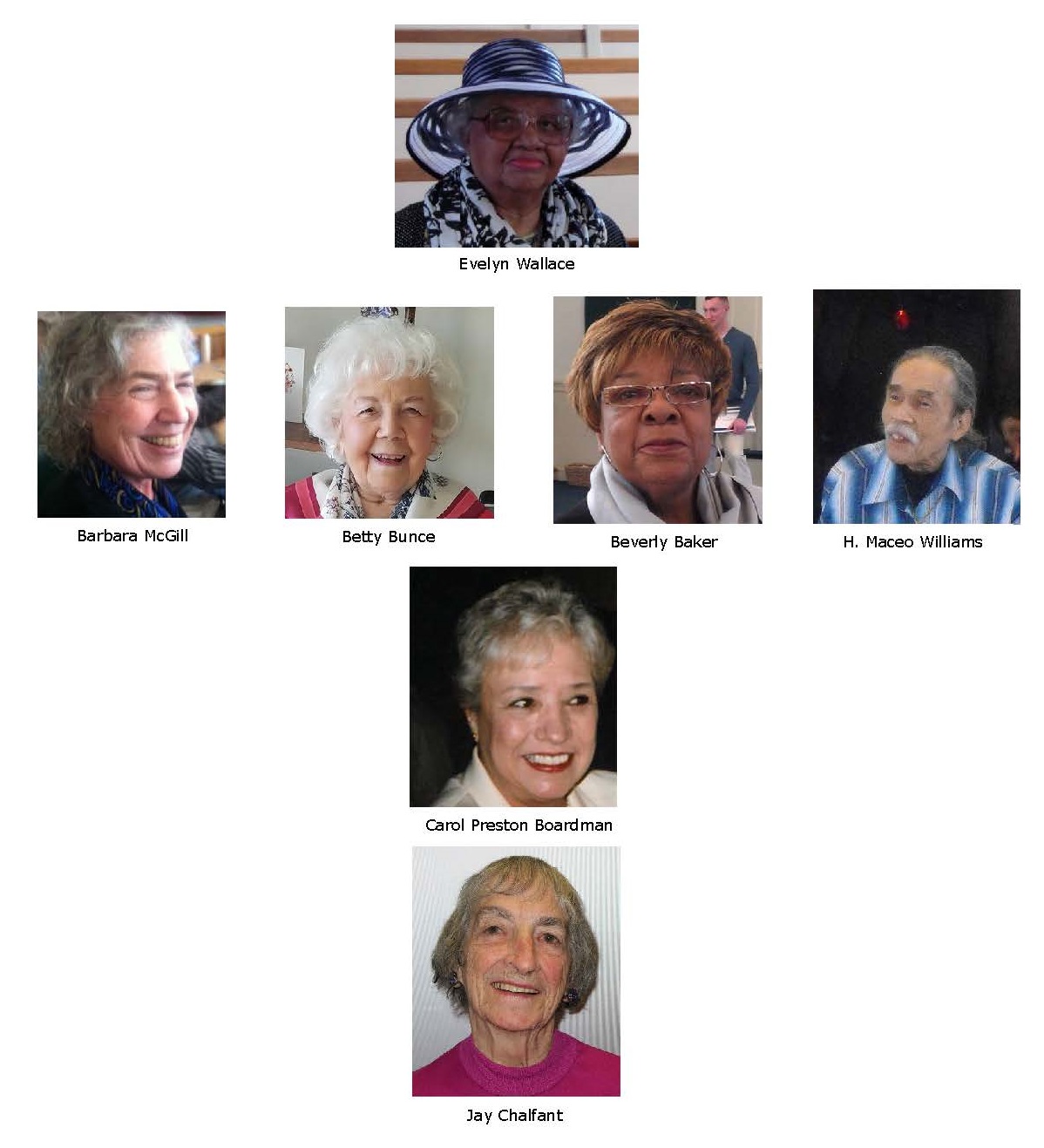
At a wedding, I’ve got to be honest, I often hear these words as domesticated and saccharine, but they aren’t.  And I think we could we go on to say, sometimes, love hurts…  We who are feeling the loss of loved ones, Jay and Carol and Maceo this past week, know this to be true.  Anyone who has had children or been part of a family can tell you that sometimes, love is hard.  Anyone who has walked alongside a beloved partner or friend through the pain of cancer treatment, or the fog of memory loss can testify that love can be very, very hard.  Loving one another takes effort, it takes time and energy.  It takes a willingness to be in hard times and places together, to confront one another and tell the truth. 

I have a pastor friend who talks about this when people join his church.  He tells them, don’t join if you think we’re going to be perfect.  We are not.  There will be conflict.  At some point, we will probably disappoint you.  But if you are willing to be a part of this church family – to show up and be engaged, to love one another despite our faults and shortcomings, to hold each other accountable and seek reconciliation when things have gone wrong, and to help make sure we get it right next time, then come.  Be part of this!  We will welcome you and love you!  We will support each other and hold each other accountable for what we profess to believe!  We will be the church together!

We live in such divided times, with our communities and even our families fractured along political fault lines.  The echo chamber of the internet has led us to such a painfully polarized place.  In the leadup to the last Presidential election, in 2015 and 2016, I remember hearing more and more of my parishioners struggle with how to handle political disagreements with friends and family members, particularly on social media.  After a close friend picked a fight with a family member on her facebook wall, one woman said, “I just don’t know what to do!  Should I confront her?  Unfriend her?  Or just let it go?  What she said really hurt me.”  I wish I knew to how to make navigating these painful disagreements easier.  If we take Jesus’ advice, we will speak the truth in love directly – offline—with those with whom we disagree.  We will do it one-on-one, and we will do it as church leaders, and if needed we will take it to the streets. 


If that person refuses to listen, “Let that person be to you as a Gentile or a tax collector” Jesus says – which doesn’t mean someone we ignore or ostracize.  Jesus spent part of his ministry reaching out to and engaging and eating with Gentiles and tax collectors!  I think this means that we are called into the fray, as individuals and as a community of faith, to love our neighbors by seeking to mend and repair, reconcile and heal the fractures that divide us.

And the testimony of scripture is that when we seek reconciliation, God’s power will be at work in and through us, making the impossible possible. 

Love takes courage, and it takes hard work.  I thank God it is work we get to do, together.


[1] McKeever, Amy, “Labor Day’s surprisingly radical origins” National Geographic, 9/4/20, https://www.nationalgeographic.com/history/reference/holidays/history-labor-day/#close

[2] Redman, Russell, “UFCW: Over 11,500 grocery workers affected in first 100 days of pandemic,” Supermarket News, 6/26/20, supermarketnews.com.

Keys to the Kin-dom

Cat Goodrich
Faith Presbyterian Church
August 23, 2020

Keys to the Kin-dom[1]
Matthew 16:13-20

The last church I served had a sexton named Kandi.  She was often the first person to greet you if you came in the back door, and she loved to ham it up for visitors.  “Welcome to First Presbyterian Church,” she’d say, “a home in the heart of the city.”  She was the longest serving member of staff by a long shot, having worked there for almost 20 years.  Kandi knew the building inside and out, like the back of her hand – and if you needed to find something, you only had to ask.  She wore black Chuck Taylor All-Stars and usually some kind of Alabama paraphernalia, and you could always hear her coming – because of her keys!  Kandi had every key to every door in the church on a big round keychain she kept attached to her belt, and every step would jangle.  Somehow, whenever a door needed to be opened, she would be able to find the right key … most of the time.  Still, there were plenty of unmarked, unclaimed, anonymous mystery keys – cups of them on her desk, a handful in mine, a box in our administrator’s office.  Keychains full.

It wasn’t a surprise, then, when I arrived at Faith and Diane handed me an enormous set of keys.  It felt right!  Churches have a lot of doors, a lot of locks!  We need a lot of keys!  But even then, I was not prepared for all of these, or these.  “We have a labelled keybox,” Mike Shirey said… oh my.  My favorite part is the layer of unlabeled keys on the bottom.  There’s a handful of unmarked keys in my new desk, and a large number of mystery keys on the keychain – big keys and tiny ones, brass and silver, some shiny, others worn, some labelled, others… I separated the few I thought I’d need and stashed the others, not ready to jingle down the hallway trying all the keys in each lock I come to.  I’ll figure them all out eventually!

These keys tell a story.  They tell of a church that is deeply loved, and cared for by people who want to protect it, keep the sacred space safe for we who gather here.  They also tell us a little something about those who’ve gone before…and the different iterations of community that have worshipped together in Faith.

But to me, these keys also remind me about how empty the building feels this morning, when it should be bustling with all of you lovely people.  Smelling like coffee and fresh flowers and candlewax!  These keys remind me how much we have invested in our physical space: how much time, energy, and resources we put into our church buildings – and how unusual this time is that we cannot safely gather here.  It’s a place you all have worked so hard to make beautiful, and keep secure.  It’s church.  And yet, it’s locked up tight.  The pandemic has shifted our understanding of so much – how and where we work, how we learn, how we connect with friends and family, how we grieve, and also how we worship.  It’s enough to make me wonder, who are we, as individuals and as a church, when we cannot gather?

The gospels often deal with the question of identity – who was Jesus?  Who were those who followed him?  How was he the anointed one, and who came before him to make him so?  What difference does it make for us, for we who want to follow him now?  Our passage this morning is a prime example:

When Jesus asks his disciples, “Who do people say that I am?” They say, a prophet, reincarnated – John the Baptist. Elijah, Jeremiah.  They get part of it, part of who he is… he did come to teach and to transform and to call for justice.  But that isn’t all.  “who do you say that I am?”  he asks.  And only Peter gets it right.  Peter!  We should all take some comfort in this.  Peter was far from perfect.  The last time we saw him, he was so burdened by doubt, he sank into the sea.  And we know where Peter’s story leads, to denial, and fear, and abandonment.  Yet somehow, Peter gets this right!  There’s hope for us yet.  Peter calls Jesus the Messiah, the son of the Living God, and Jesus rewards him by saying, Peter, You are a Rock and on you I will build my church.

This is the first of only two references to church in all of the gospels.  The word is ekklesia, and may be more accurately translated as “assembly” – those who have been assembled or called by God into community.  And it is always a good reminder for me, as a professional Christian, to note that Jesus does not say – on you, Peter, I will build my church and worship will be on Sunday mornings around 11 o’clock, and the sermon will be no more than 20 minutes, and the pews will be wooden, and the music will be played on an organ and it will be spectacular.  None of that.  Jesus was an itinerant preacher; he built a movement of people who literally followed him from place to place.  Church, of course, came after.  And before it was parapets and pews and pianos, it was people.

The pandemic has truly hit home what we probably knew all along, what we affirmed with our wise young ones this morning – That church is not the building.  Church is the people, it’s you and me, Mike and Mercy and Melvin and Maddie and Marilyn and everyone else here too.  The community of the faithful, we who walk together, seeking to follow Christ and love one another.  Seeking justice.  Building peace.  Honoring God.

Jesus says to Peter, “I will give you the keys of the kingdom of heaven, and whatever you bind on earth will be bound in heaven, and whatever you loose on earth will be loosed in heaven.”  I know Jesus didn’t hand Peter a keyring like this one when he promised him the keys to the kingdom of heaven.  (don’t you wish he had, though?). It’s an apt metaphor: keys do lead to freedom… the freedom to come and go as you please, to open any door and close it again.  Keys can make you safe and secure… the feeling of checking to make sure the front door is locked before heading to bed for the night.  Keys can also liberate.  The feeling of your parents’ car keys in your hand as you head out the door, to meet friends, or even just to drive, windows open, wind in your hair, music blaring.  Freedom!  The keys to your very own apartment.  The feeling of turning the key in the lock of a business you built, and opening the door for the very first time.  Such possibility!

Of course, sometimes keys mean freedom, sometimes they don’t.  As easily as keys can set us free, and they can also shut us in.  Anyone who has been locked up or visited a prison can remember the sound the soul crushing clang and buzz of a gate being open or shut – the scrape of a metal key in a lock.

Keys aren’t so liberating if you’re the one who is locked in or out.  And the keys to my first apartment felt different than the keys to the first home I owned… since the housekeys came with a list of payments going out thirty years into the future.  Freedom, but with a cost.

The keys to the kingdom?  What did he mean?

Eric Barreto points out that when Jesus asks, “who do you say that I am?” he not only looking for a confession of faith.[2]  He’s also seeking to shape the community that will follow in particular ways.  Who Christ is forms who they are, and hopefully will inform what they do.  So when he offers the keys to the kingdom and the power to bind and to free, he is calling those who will follow him to continue his work: to heal and to cast out demons, and to share the gracious and liberating love of God.  The assembly of God’s people will bind up the world’s death dealing powers by the power of love in Christ, forgiving and freeing people from the burdens they bear.

And again and again, it happens!  Words of forgiveness and grace at the font unlock the burden of guilt and free us to live as whole, loved, forgiven people week after week.  Across the country, the church is at work to liberate and set free: In a presbytery in Idaho last year, churches pooled their resources to buy and forgive more than $1 million of crushing medical debt in their state.[3]  In St. Louis, those who attended GA two years ago gave almost $50,000 to pay bail and release folks from the local jail.  Through addiction and recovery programs, by advocating for refugees and asylum seekers, by proclaiming God’s life-giving love for all and embodying that love around an ever-expanding table – the people of God are working for liberation.

Everywhere we look, there is another person bound up by the death-dealing powers of the world.  Mass incarceration.  Grief.  Debt.  Fear.  Poverty.  Shame.  Addiction.  So much that needs unlocking.  It’s a good thing we have a lot of keys.

[1] Ada-Maria Isasi-Diaz is a Cuban-American theologian who coined the term, “the kin-dom of God.”  As a feminist and Latina, she rejected the oppressive hierarchy of a kingdom, and instead painted a vision of the family of God – the kin-dom – where we witness and are agents of God’s liberating work in and through our love for one another.

[2] Barreto, Eric, “Commentary on Matthew 16:13-20,” Preach this Week 8/24/14, from workingpreacher.org, http://www.workingpreacher.org/preaching.aspx?commentary_id=2162

[3] Ferguson, Mike, “With a nod to John Oliver, churches are wiping the slate clean statewide,” Presbyterian News Service, 11/4/19,  https://www.presbyterianmission.org/story/church-presbytery-raise-money-to-wipe-out-medical-debt/

Canaanite Lives Matter

Rev. Cat Goodrich
Faith Presbyterian Church
August 16, 2020

Canaanite Lives Matter
Matthew 15: 21-28

When I was pregnant with Maddie, I read everything I could find about what was happening to my body. It was hard to comprehend the changes both inside and out As my belly swelled and my bones shifted and it became a bit difficult to breathe I felt like a stranger in my own body some days. As the baby grew, books would inexplicably compare her size to progressively larger pieces of fruit…first a blueberry then a grape, then a grapefruit and a cantaloupe. I prepared for childbirth like I was studying for an exam. I took classes.  I did yoga.  Read books.  Hired a doula.  Talked to friends, my mother, my sister. As if having as much information as possible about what might happen would give me some control over the situation, which was, of course, impossible. But I read and I stretched and I practiced breathing and visualization trying to trust that my body knew what needed to happen and hoping that all would be well.

Something my sister told me, something that ended up being a guidepost for me through many, many hours of labor, was to expect there to be a point where I didn’t think I could go on. A time when I would be sick, and tired, and feel like the pain was too much, like I couldn’t do it anymore. That’s called transition, she said.  And that’s when you know you’re close. Just breathe. And then push.

I’ve been thinking about labor, about the work it takes to bring new life into the world, Because in this passage, this unbelievable exchange between Jesus and the Canaanite woman, Where she runs after him, screaming in the street, and he ignores her and then insults her and then… heals her daughter that word, the one translated “shouting” can also mean crying out, shrieking – and the one other time it’s used in the Bible, it means groaning with labor pains.

This Canaanite woman, she is crying out for help for her beloved child, but I have to wonder – is she also birthing something new as she challenges Jesus?

Can you see her?  The sweat on her brow, the pain etched in her face, hair wild with worry, chest heaving as she tries to catch her breath and cry out.  Jesus and the disciples, they don’t know what to do with her, so they don’t want anything to do with her.  They are Jewish men, they shouldn’t be speaking with a Gentile woman in the street anyway, so they ignore her.  Hope maybe she’ll just go away.

But you can’t ignore contractions.  When the time comes, it comes.  And suddenly there she is, kneeling in front of him.  Sparring with him.  Pushing him to care.  To expand his sense of compassion.  To extend the table to include everyone.  To include her family.  To include her.

I’ve got to be honest.  This exchange is on a short list of things I wish Jesus had never said.  Their interaction rankles me, it provokes me.  It makes me want to say, “O no he didn’t…” The dogs, Jesus?  Really?!

Biblical scholars have tied themselves in knots trying to explain or justify why Jesus may have said this.  Was he testing her?  Was he being playful?  If he was testing or teasing, I don’t have much patience for it.  “Gentile dogs” was a pretty common slur in Jesus’ day.  And I’m guessing the woman didn’t appreciate being called that.  But her daughter was sick.  And what parent wouldn’t do whatever it took to seek healing for their child?  Risk humiliation?  It’s worth it, if the girl is healed.  But why does Jesus respond to her like this?!

I think Jesus was just being human.  He was tired!  He was travelling, in an unfamiliar place, toward the Greek cities of Tyre and Sidon.  These were coastal cities, just south of modern-day Beirut, in case you’re wondering, where that horrible explosion happened two weeks ago.  Remember Jesus had been up all night praying a few days prior, then instead of resting in the boat as his disciples crossed the Sea of Galilee, he was out walking on the water. Then they walked, northwest, with crowds following him, trying to touch his cloak, desperate for healing. Jesus was tired and worn out and had a moment that was all too human – the woman screamed out to him, and he snapped.

Have you ever said something and instantly regretted it?  Maybe that’s what happened.  But whatever the reason for his rudeness, he’s not off the hook.  Recent reckonings on racism and sexual harassment have taught us that regardless of your good intentions, what you actually do or say is what matters. And comparing this woman to a dog is a hurtful, harmful statement.  Jesus’ bias is showing, big time.

This is an interesting moment to be reading this text.  The outcry in the streets over the deaths of George Floyd, Breonna Taylor, and so many others, is building power to create real change – in some unexpected places. News outlets and nonprofits, colleges and universities, are being to be called to account for systemic biases that devalue and make life and work more difficult for BIPOC: from Bon Appetit magazine[1] to Jim Wallis and Sojourners[2] and my own alma mater, Austin College.

The sands are shifting – Organizations are being reorganized, recreated, maybe even reborn.  I wonder, where is the church in this?  Where is the company you work for, your family?  Are we listening to the multitude who are crying out?  And like the Canaanite woman, are we lending our voices to fight for healing for those whom we love?  Do we have the courage to demand change for a more equitable, just, and loving world?  Do we have the persistence to push for it?

When the Canaanite woman challenges Jesus, he doesn’t walk away.  He doesn’t double down and insult her again, or again say he came to save only Jewish people.  He finally hears her.  He is convicted by her.  And he changes his mind.  He heals her daughter.

The capacity to change is a gift from God.  The ability to learn from our mistakes, to change our minds, to admit when we are wrong, and to try to do better – these are part of being human.  One of the qualities historically ascribed to God is immutability – God is the same yesterday, today, and tomorrow.  The theory goes that if God is perfect, then why would God ever need to change?  But maybe one of the gifts of the incarnation is that God does change – God is changed, in relationship with us, just as we are changed in relationship with one another and with God.  Maybe that’s exactly what happens here – Jesus, fully human, fully God, realizes the extent of God’s love for the world –love that includes all people, no matter where they’re from, no matter who they love, no matter what they look like or the language they speak or what they believe or doubt.  God’s love that extends even to a Canaanite woman who is brave enough to challenge him, persistent enough to point out his biases, and demand that he change.

Maybe you can identify with Jesus in this story – either you have unexamined biases, or you are held back in some way by your sense of propriety or even fear.   Maybe you are just worn out and have said something you shouldn’t have.  It’s easy enough to do in this stressful pandemic time, people are so very tense, worried, stretched to the breaking point, ready to snap.

Maybe you are like the woman, so desperate for healing that you are willing to confront God herself to beg for a miracle.  Maybe you are so sick and tired of the lines that have been drawn around who is in and who is out that you dream of a place where everyone is welcome.  A world where there is enough for all, more than enough for children and especially for dogs.

Maybe you can identify with the disciples who don’t want to hear any of it.

The good news for all of us is that wherever we find ourselves in this story, there’s hope for us yet.  No matter how we might try to box it in, God’s power will not be contained.  God’s power would not be constrained by Jesus’ cultural bias.  It wasn’t held back by his sense of propriety; it wasn’t stopped by his exhaustion or even by his short temper or hurtful words. Despite all of this, God’s power healed the girl and changed Jesus’s understanding of who was welcome in God’s kingdom.  So we, too, can have hope that through us — sometimes despite us – despite our short tempers, or hidden bias, or hurtful words, God is at work – to heal and to mend, to reconcile and make new.

It can be hard to trust that this is true.  When your daughter, your son, your family and friends are the ones suffering.  When another unarmed black man was killed at a routine traffic stop in Georgia last week,[3] when the fires of racism continue to be fanned by people in power, when the pandemic still rages on, and even US Postal workers become key players in ensuring people have a right to vote… it is no wonder if we feel exhausted by it all, like the pain is too much, like we can’t do it anymore.  We can’t go on.  Everything feels so heavy, so dark.

That’s called transition, my sister said.  And that’s when you know you’re close.  Just breathe.  And then push.

Valerie Kaur is a Sikh activist who founded the Revolutionary Love Project.  She’s a human rights lawyer, a documentary filmmaker, an activist, and a mother who has been working to challenge injustice and build compassion in response to the unprecedented rise in hate crimes motivated by race and religion in our country since 9/11.  Kaur wonders what “if this darkness is not the darkness of the tomb, but the darkness of the womb? What if our future is not dead, but still waiting to be born? What if this is our great transition? Remember the wisdom of the midwife. [Breathe and push].”[4]

The good news of the gospel is this… something new is waiting to be born in and through each one of us.  A table that is big and long enough for all of us.  A circle that is wide and unbroken.  A home where all are welcomed and valued.

So let’s breathe deep.  Trust that our bodies know what to do.  And then let’s keep pushing, together.

[1] Pashman, Dan, “A Reckoning at Bon Appetit,” on the Sporkful podcast, June 13, 2020, http://www.sporkful.com/a-reckoning-at-bon-appetit/

[2] Khan, Aysha, “Jim Wallace replaced as Sojourners editor after controversy over article on Catholic racism,” Religion News Service, 8/14/20, https://religionnews.com/2020/08/14/sojourners-jim-wallis-editor-sandi-villarreal-catholic-white-racist-editorial-independence-policy/

[3] Waller, Allyson, “Georgia Trooper is Charged in Fatal Shooting of Black Driver,” 8/15/20, The New York Times, https://www.nytimes.com/2020/08/15/us/georgia-state-trooper-charged-murder.html?auth=login-email&login=email

[4] Kaur, Valerie, “3 Lessons of Revolutionary Love in a Time of Rage,” talk given at TEDWomen 2017, https://www.ted.com/talks/valarie_kaur_3_lessons_of_revolutionary_love_in_a_time_of_rage/transcript